|
| |
 A
Specific Plan For Medical Education Reform A
Specific Plan For Medical Education Reform
We must remove unnecessary obstacles
in the system that increase cost, intensify stress, and consume valuable
time.
We must emphasize preventive
medicine, outpatient treatment, and functional medicine. We must expand our focus to include nutrition. Furthermore, we can eliminate the cost to
the student and his family.
At present, a free, privately funded internet
university, which will be open to all, is being formed.
This university will inevitably include medical education, with teaching
methods essentially the same as those that I have proposed. There
should be telephone and email support available, but we need not wait
for that. We can start now.
At what age should the medical education start? If conducted via the internet, there would be
no minimum age. Rather than begin with the medical student
memorizing and then forgetting volumes of inconsequential information,
he or she would begin with basic sciences that contain only relevant
information. By reducing the sheer volume of information, the
overall rates of retention would be much higher.
Without the institutions (and their inherent rigidity or expense),
this education would be essentially
free of cost. For a mere $29, students could begin their studies
with a paperback book entitled
Medical Assistant: Program Review and Exam Preparation by
Patricia S. Hurlbut. This book would |
 |
familiarize the student with the basic
routine of a doctor’s office.
Once he or she has started his or her
apprenticeship, I would suggest that he read
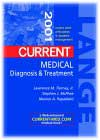
Current Medical Diagnosis and Treatment 2001. This
book will serve as an excellent reference tool. |
 |
|
|
| Although some of the information in Current
Diagnosis is incorrect, most doctors still rely upon it. The
student should be cautious of accepting any information at face value,
and should always augment his information base by scouring the resources
available on the internet, and carefully considering the information
presented to him by motivated patients. It is much easier to learn
about diseases and medications when dealing with a patient who is
actually suffering from that particular ailment.
Once the student has completed this independent study,
entirely on his own initiative, he
can approach his first prospective doctor-mentor. The student's
hands-on medical education would begin with the student taking patient
histories. This 'apprenticeship' was discussed earlier.
Next he would learn the fundamental elements of disease and medication.
The student will essentially offer to act as the doctor's medical
assistant in exchange for the doctor's
willingness to associate with him. Based on an interview to
determine the applicant’s maturity and other personal attributes, and a
standardized test administered to measure the student's understanding
of basic medical concepts, the doctor may agree to such a partnership.
Both doctor and student would agree to such an arrangement. The
apprenticeship would be entirely voluntary on both sides.
|
 |
|
Although the student
would not give medical advice or treatment, he would provide
the valuable - and often time consuming service - of taking patient
histories. This would provide the student with a wealth of
knowledge.
The doctor would confirm the accuracy of the key points in the
patient histories and provide reports monitoring |
| the progress of the students. In contrast
to current medical education, the student would begin in an outpatient
setting, as it is less stressful. Also, the monitoring of his
progress would be more easily controlled. In addition to
apprenticeships with many doctors practicing in different specialties,
the student's education would be augmented with conferences and
discussion groups.
At the end of the second and fourth years of the
student's apprenticeship, he
would be required to pass written examinations, prepared by a committee
of various doctors. Additionally, such doctors could, for
example, create a finite set of medical multiple choice questions
(between 5,000 - 10,000), from which a random sample would be drawn for
the student's testing. The student could also be required to make
a contribution to the medical community in the form of preparing a web
site on the diagnosis and treatment of a specific disease. At the
end of the four years, there would be a five-day oral exam, conducted
by a committee of physicians who practice in the field of the student's
specialty. Upon successful completion of this process, the
student would become certified in the practice of his specialty, but
may elect to test for certification in other areas if he meets the
specialty-specific requirements. At the core of our
"university without walls", is the mentor/apprentice relationship. See the enlightening
film,
The Cider House Rules, and observe the relationship that
exists between the doctor and his apprentice. They relate to each
other much like a father and a son. I would expect that
after reading this particular section, a number of questions would be raised with regard to
the details of executing our plan of reform. For this
purpose, there is a
discussion board where you can post comments and inquiries.
Please do not feel as though you need any specific qualifications to
post to this forum. We welcome the input of people from all walks
of life.
Printable
Page | Back
|
Top | Next
|
Printable Site
|
|
|